How Health Insurance Works After a Car Accident With External and Internal Links

A car accident can turn one bad moment into weeks of medical bills, insurance calls, claim numbers, and confusing letters. The hardest part is that the hospital, your auto insurer, the other driver’s insurer, and your health plan may all be involved at the same time.
The short version is this: medical care comes first. Payment comes after. In many cases, your auto coverage, the other driver’s liability coverage, and your health plan may each have a role. The order depends on your state, your policy, who caused the crash, and whether you have coverages like personal injury protection or medical payments coverage.
This guide explains how the pieces fit together, what to expect from medical billing, and how to avoid common mistakes after a crash.
This article is for general information only. It is not legal, medical, or financial advice. Insurance rules vary by state and policy, so review your documents and speak with a qualified professional if you need guidance about a specific claim.

What happens to medical bills right after a crash
After a crash, the first priority is treatment. Emergency rooms and urgent care centers do not usually wait for fault to be decided before treating injuries. They will gather insurance information, document the visit, and send bills later.
That is where confusion often starts.
A hospital may ask for:
Your health plan information
Your auto insurance information
The other driver’s auto insurance information, if available
The claim number from your auto insurer
The date, time, and location of the crash
Any police report number
Whether the injury happened while working
If you are badly hurt, you may not have all of this right away. That is normal. You can update the billing department later.
The hospital may bill more than one place
Medical providers may bill your health plan first, your auto insurer first, or ask you to provide both. Their process often depends on state law, the provider’s billing system, and the words in your insurance policies.
For example, if you live in a no-fault state and have personal injury protection, the provider may send crash-related bills to your auto insurer before your health plan. In another state, your health plan may process the bills while the injury claim against the at-fault driver is still pending.
If the provider does not have the right information, it may send the bill directly to you. That does not always mean you must personally pay the full amount right away. It may mean the claim has not been routed correctly.
Keep every bill and explanation of benefits
A medical bill is not the same thing as an explanation of benefits, often called an EOB.
A medical bill comes from the hospital, doctor, imaging center, ambulance company, therapist, or pharmacy. It shows charges and any balance the provider says is owed.
An EOB comes from an insurer. It explains what was billed, what the insurer allowed, what it paid, what was denied, and what may be your responsibility.
Do not throw either one away. Keep:
Bills
EOBs
Receipts
Prescription records
Mileage logs for medical visits
Referral notes
Discharge instructions
Letters from insurers
Collection notices
Claim numbers
Even if another driver caused the crash, these records may matter later. They help prove the type of care you needed, the cost of treatment, and the timeline of your recovery.
For a broader overview of what to save after a collision, see our internal guide on what to do after a car accident.
Which insurance may pay for accident-related medical care
Several types of insurance can touch the same medical bill. That does not mean they all pay at once. It means each one may have a different job.
The most common sources are:
Coverage type | Who has it | What it may do |
Health plan | You, a spouse, parent, employer plan, marketplace plan, Medicare, or Medicaid | May pay medical bills according to plan rules, subject to deductibles, copays, coinsurance, and network terms |
Personal injury protection | Usually part of your auto policy in no-fault states and optional or required in some others | May pay crash-related medical expenses and sometimes lost wages, regardless of fault |
Medical payments coverage | Optional auto coverage in many states | May pay medical expenses after a crash, often regardless of fault, up to the policy limit |
Bodily injury liability coverage | The at-fault driver’s auto policy | May pay damages through a settlement or claim, often after fault and damages are reviewed |
Uninsured or underinsured motorist coverage | Your own auto policy, if you bought it or your state requires it | May help if the at-fault driver has no insurance or not enough insurance |
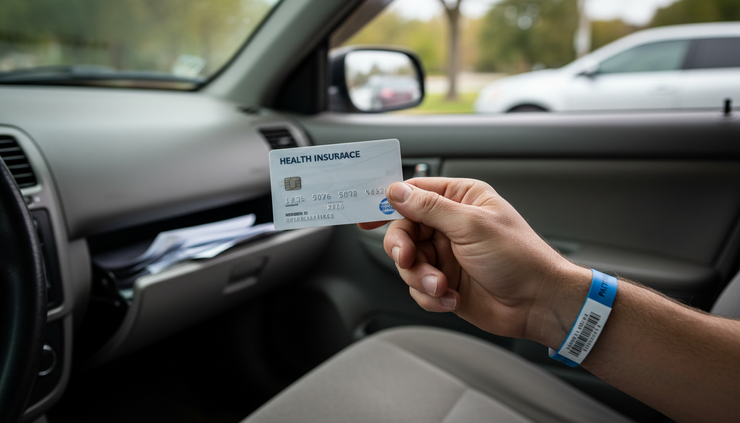
Health Insurance can be part of the payment chain, but it may not be the only source. Auto coverage is often the first place to look after a crash, especially if you have PIP or MedPay.
Personal injury protection can pay regardless of fault
Personal injury protection, commonly called PIP, is tied to auto insurance. In no-fault states, it is often required. In other states, it may be optional or unavailable.
PIP may cover:
Emergency treatment
Follow-up doctor visits
Imaging
Surgery
Physical therapy
Rehabilitation
Some lost income
Essential services, depending on the policy and state
PIP rules vary widely. Some states have deadlines for seeking treatment. Some policies require specific forms. Some states let health insurance and PIP coordinate in a set order.
If PIP applies, your medical provider may need your auto claim number. If you delay giving it, bills may get denied or sent to collections by mistake.
Medical payments coverage may fill gaps
Medical payments coverage, often called MedPay, is also part of an auto policy. It is usually optional. MedPay can be useful because it may help with medical bills no matter who caused the crash.
Depending on the policy, MedPay may help pay:
Deductibles
Copays
Ambulance bills
Emergency room balances
Treatment for passengers
Funeral expenses in fatal crashes
MedPay usually has a set limit. Once the limit is used, it stops paying. Common limits vary by policy, and some people have no MedPay at all.
If you are not sure whether you have it, check the declarations page of your auto policy or call your insurer.
The at-fault driver’s insurance usually pays later
Many people expect the at-fault driver’s insurer to pay medical bills as they arrive. That is often not how liability claims work.
The other driver’s bodily injury liability insurer may investigate first. It may review:
Fault
Police reports
Photos
Witness statements
Vehicle damage
Medical records
Whether treatment relates to the crash
The amount of available coverage
In many injury claims, the at-fault insurer pays through a settlement after treatment is complete or the claim is ready to resolve. That can take months or longer. During that time, medical providers still expect their bills to be handled.
This is why your own health plan, PIP, or MedPay may matter even when someone else caused the wreck.
For more on fault-based claims, see our internal resource on how personal injury claims work.
How payment order usually works
There is no single national rule for payment order after a car accident. The order depends on the state and the policy language. Still, a few patterns are common.
In a no-fault state
In a no-fault state, your own PIP coverage may be the main first payer for crash-related medical bills, regardless of who caused the accident. Your health plan may pay after PIP is exhausted, or it may coordinate with PIP based on state rules and your policy.
A typical sequence may look like this:
You get medical treatment.
You file a PIP claim with your auto insurer.
Providers submit bills to PIP.
PIP pays covered bills up to the policy limits.
Your health plan may process remaining bills, if allowed.
A claim against the at-fault driver may proceed if your injuries meet state legal thresholds.
No-fault does not always mean nobody is blamed. It means your own policy may pay certain benefits first, without waiting for a fault decision.
In an at-fault state
In an at-fault, or tort-based, state, the driver who caused the crash is financially responsible for the harm they caused. In practice, their insurer may not pay medical bills one by one as treatment happens.
A typical sequence may look like this:
You get medical treatment.
You give providers your health plan, auto policy, or both.
Your health plan may pay according to its terms.
MedPay may help with out-of-pocket costs, if you have it.
You make a bodily injury claim against the at-fault driver.
Any settlement may need to account for medical bills, liens, and reimbursement claims.
This means the health plan may pay now, then later ask to be repaid from the settlement. That process is called subrogation or reimbursement.
If you were a passenger
Passengers can have several possible sources of coverage.
A passenger may look to:
Their own health plan
Their own auto policy, if it includes PIP or MedPay
The driver’s PIP or MedPay
The at-fault driver’s liability coverage
Uninsured or underinsured motorist coverage
Passenger claims can get complicated when more than one driver shares fault. That does not mean the passenger caused the problem. It means insurers may dispute which policy must pay and how much.
If the crash happened while working
If you were driving for work or riding as part of your job, workers’ compensation may apply. That can change the payment order.
Examples may include:
Delivery drivers
Home health aides traveling between patients
Construction workers traveling between job sites
Employees running a work errand
Drivers operating a company vehicle
Workers’ compensation rules are state-specific. If workers’ comp applies, medical providers may need that claim information. Your health plan may deny payment if it believes the injury should be handled through workers’ compensation.
The U.S. Department of Labor has general information about workers’ compensation for certain federal programs at dol.gov, but state rules control most private employment claims.
Why your health plan may ask questions before paying
After an accident, your health plan may send a letter asking how the injury happened. This can feel annoying, but it serves a purpose.
The insurer wants to know whether another person, auto policy, workers’ comp carrier, or other payer may be responsible. The letter may ask:
Was the injury from a car crash?
What was the date of the accident?
Was another driver involved?
Was a police report filed?
Do you have an attorney?
Did you file an auto insurance claim?
Was the injury work-related?
Do you expect a settlement?
Answer these letters. If you ignore them, the health plan may delay or deny payment until it gets the information.
This is often about subrogation
Subrogation means an insurer that paid your medical bills may seek reimbursement from the party that was legally responsible. In car accident cases, this often means your health plan pays medical providers, then later seeks repayment from your settlement with the at-fault driver’s insurer.
For example:
Your health plan pays $12,000 in crash-related medical bills.
You later settle your injury claim with the at-fault driver’s insurer.
Your health plan asserts a right to be repaid from the settlement.
The final amount may depend on plan terms, state law, and negotiation.
Private health plans, employer-sponsored plans, Medicare, Medicaid, and some government plans may all have reimbursement rights. The rules are not identical.
This is one reason settlements should not be spent before liens and reimbursement claims are resolved.
ERISA plans can be different
Many employer health plans are governed by a federal law called ERISA, short for the Employee Retirement Income Security Act. ERISA plans can have strong reimbursement language. State law may not apply to them the same way it applies to other insurance plans.
If your plan is through an employer, ask for the plan documents, not just the summary card. The actual plan language matters.
The U.S. Department of Labor provides general consumer information about health plans and benefits through the Employee Benefits Security Administration at dol.gov/agencies/ebsa.
Medicare and Medicaid have special rules
If Medicare or Medicaid pays for accident-related treatment, reimbursement issues can be strict. These programs may have rights to recover from settlements, judgments, awards, or other payments.
Medicare provides information on coordination of benefits and recovery through the Centers for Medicare & Medicaid Services at cms.gov. Medicaid rules vary by state.
If Medicare, Medicaid, TRICARE, VA benefits, or another government program is involved, take lien notices seriously. Missing deadlines or ignoring letters can create problems later.

Common billing problems after a car accident
Even when all insurers are acting in good faith, accident billing gets messy. Here are the problems that come up most often.
The provider bills the wrong insurer
A provider may bill your health plan when PIP should pay first. Or it may bill auto insurance without the claim number. Or it may bill you directly because it did not receive enough information.
Call the billing office and ask:
Which insurer did you bill?
What claim number did you use?
Was the claim denied?
What denial code did you receive?
Do you need PIP, MedPay, or health plan information?
Can you pause collections while the claim is corrected?
Write down the date of the call, the person’s name, and what they said.
Your health plan denies the claim as accident-related
Some health plans initially deny claims when they see accident diagnosis codes. The plan may be waiting for accident details.
If this happens, ask whether the insurer needs a third-party liability form or accident questionnaire. Send it promptly.
You can also ask the medical provider to resubmit the claim after the insurer updates the file.
The auto insurer says treatment was not related
Auto insurers may dispute whether treatment is connected to the crash. This can happen if there was a gap in care, prior medical history, or treatment the insurer views as excessive.
To reduce disputes:
Tell doctors clearly when symptoms started.
Mention the crash during each accident-related visit.
Follow treatment instructions.
Keep referrals and test results.
Avoid long unexplained gaps in treatment.
Do not exaggerate symptoms.
Prior injuries do not automatically ruin a claim. But insurers often review medical history closely.
Bills go to collections while insurance is pending
This is stressful and common. Medical providers may send accounts to collections even when an insurance claim is still being processed.
Act early. Ask the billing department if they can place the account on hold while insurance reviews the claim. If the debt is already in collections, ask for itemized bills and proof of what was submitted to insurance.
The Consumer Financial Protection Bureau has general information about medical debt and credit reporting at consumerfinance.gov.
You receive a balance bill after emergency care
Emergency care often involves multiple providers. The hospital may be in network, but an ambulance company, radiologist, anesthesiologist, or emergency physician may bill separately.
Federal surprise billing protections may apply to many emergency services and certain out-of-network situations. The Centers for Medicare & Medicaid Services explains patient protections under the No Surprises Act at cms.gov/nosurprises.
These rules can be technical. If you receive a large out-of-network bill after emergency treatment, do not assume it is correct. Ask the provider and insurer to review it.
How settlements affect medical bills
A car accident settlement is not just money for pain and inconvenience. It may need to cover medical bills, future care, lost wages, out-of-pocket costs, and reimbursement claims.
Before accepting a settlement, check whether any of these are still unresolved:
Unpaid medical bills
Pending health plan claims
PIP or MedPay balances
Hospital liens
Medicare or Medicaid liens
Workers’ compensation liens
Provider letters of protection
Collection accounts
Future treatment needs
Once you sign a release, you usually cannot go back and ask the at-fault insurer for more money. That is why settling too early can be risky, especially if symptoms are still changing.
A settlement may have to repay insurers
If your health plan paid crash-related bills, it may claim part of your settlement. This can surprise people who thought the settlement was theirs to keep.
The reimbursement amount may depend on:
The plan language
State law
Whether the plan is self-funded
The total settlement
Attorney fees and case costs
Whether fault was disputed
Whether the available insurance was limited
Whether the person fully recovered
Some reimbursement claims can be negotiated. Others are harder to reduce. The safest approach is to identify them early.
Medical liens can attach to the claim
A medical lien is a claim against settlement money. Hospitals, doctors, health plans, government programs, or workers’ comp carriers may assert liens depending on the situation and state law.
A lien does not always mean the amount is correct. It means someone claims a legal right to be paid from the recovery.
Ask for:
The legal basis for the lien
An itemized list of charges
Proof of payments made
Adjustments or write-offs
The current payoff amount
Contact information for lien resolution
Do not ignore lien letters. They tend to become harder to fix later.
Future care should be part of the conversation
Some injuries heal quickly. Others need months of therapy, injections, surgery, follow-up imaging, or long-term medication. If you settle before you understand future care needs, you may end up paying later costs yourself.
Ask your medical provider:
Do I need follow-up treatment?
Have I reached maximum medical improvement?
Will I need therapy or specialist care?
Are there activity limits?
Could symptoms return or worsen?
What warning signs should prompt urgent care?
This is not just a legal issue. It is a practical budgeting issue.
For more on handling bills while a claim is open, see our internal article on medical bills after a car accident.

Practical steps to protect yourself
The best time to prevent insurance problems is early in the claim. A few organized steps can save hours later.
Get medical care and follow instructions
Do not skip care because the billing process feels uncertain. If you are hurt, get evaluated. Some injuries are not obvious right away, including concussions, soft tissue injuries, internal injuries, and symptoms that worsen after adrenaline fades.
Follow the treatment plan. If you cannot attend an appointment, reschedule it and keep a record. Insurers often look at gaps in care and missed appointments.
Report the accident to your auto insurer
Even if another driver caused the crash, report it to your own insurer. Your policy may require prompt notice. Your insurer can also confirm whether you have PIP, MedPay, uninsured motorist coverage, or underinsured motorist coverage.
When you call, ask:
What coverages may apply to medical bills?
What are the limits?
Is there a deductible?
Do I need a claim number before treatment is billed?
Are there forms I must complete?
Are there deadlines for submitting medical bills?
Does my state require PIP to be used first?
Keep your answers factual. Do not guess about injuries or fault.
Give providers the right insurance information
At each medical visit, tell the provider the injury came from a car accident. Give them the correct claim information.
Bring:
Health plan card
Auto insurance card
PIP or MedPay claim number
Adjuster contact information
Workers’ comp claim information, if applicable
Attorney contact information, if represented
If you later learn the provider billed the wrong place, call and correct it quickly.
Read every insurance letter
Insurance letters can look repetitive, but some contain deadlines. Open all mail and email from:
Your auto insurer
The other driver’s insurer
Your health plan
Medicare or Medicaid
Medical providers
Collection agencies
Subrogation vendors
Workers’ compensation carriers
Subrogation vendors often work for health plans. A letter may not come directly from the name on your insurance card, so read carefully before discarding it.
Avoid recorded statements without preparation
Your own insurer may need basic information to process benefits. The other driver’s insurer may ask for a recorded statement. Be careful.
A recorded statement can affect fault, injury disputes, and settlement value. If injuries are significant, fault is disputed, or an insurer is pressuring you, consider getting legal advice before giving a detailed recorded statement.
Track out-of-pocket costs
Small costs add up. Keep receipts for:
Prescriptions
Braces, crutches, or medical equipment
Copays
Parking at medical facilities
Transportation to appointments
Home care help
Over-the-counter medications recommended by a provider
Use a folder, spreadsheet, or notes app. The method matters less than consistency.
Be careful with early settlement offers
An insurer may offer money before treatment is complete. That offer may seem helpful when bills are arriving, but it may not account for future care or reimbursement claims.
Before signing a release, know:
The full amount of medical bills
What has been paid
What remains unpaid
Whether any liens exist
Whether your health plan wants repayment
Whether you need future treatment
Whether the settlement releases all claims
Once the claim is closed, unpaid medical bills usually remain your problem.
When legal help may be useful
Not every fender bender needs a lawyer. Small claims with minor injuries and clear coverage may be manageable on your own.
Legal help may be useful when:
Injuries are serious
Fault is disputed
Multiple vehicles were involved
A commercial vehicle caused the crash
The at-fault driver was uninsured
The at-fault driver had low policy limits
Medicare, Medicaid, or workers’ comp is involved
A health plan asserts a large reimbursement claim
A hospital lien appears
Bills are in collections
The insurer denies treatment as unrelated
You are asked to sign a broad release
A lawyer may help identify available coverage, deal with liens, gather records, calculate damages, and avoid settling before the medical picture is clear.
If the other driver has no insurance or too little coverage, your own policy may matter more than expected. See our internal guide on uninsured and underinsured motorist coverage.
A simple way to think about the payment chain
After a car accident, think of medical billing in layers.
The first layer is immediate care. Get treated and give providers the insurance information you have.
The second layer is first payment. PIP, MedPay, workers’ comp, or your health plan may pay bills according to policy rules and state law.
The third layer is fault-based recovery. If another driver caused the crash, their liability coverage may later pay through a settlement or claim.
The fourth layer is reimbursement. Any insurer or program that paid medical bills may claim a right to be paid back from the settlement.
The mistake many people make is focusing only on the at-fault driver’s insurance. That coverage matters, but it often does not solve the immediate billing problem. Your own policies and health plan may keep bills moving while the injury claim is still open.
The best next step is simple: create one file for the accident, report the claim to your insurer, give medical providers complete billing information, and read every letter before you pay or ignore a bill. A little organization early can protect your claim, your credit, and your recovery.


Comments