How AI Is Changing Health Insurance Claims Processing in 2026

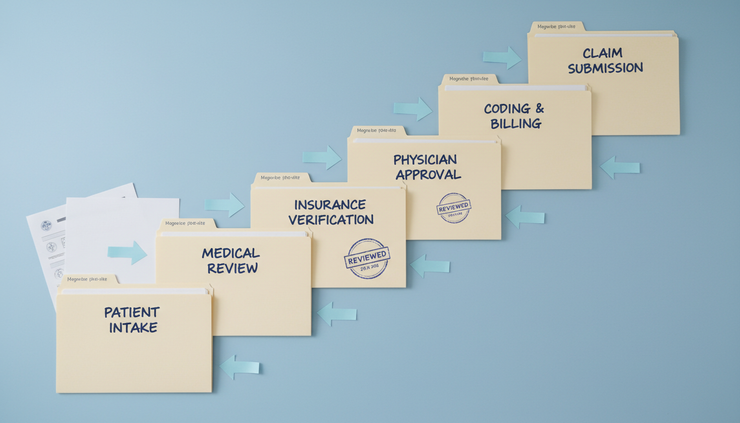
A health insurance claim looks simple from the outside. A patient gets care, a provider submits a bill, the insurer reviews it, and money changes hands. Inside the system, it is far messier.
A single claim can touch eligibility files, provider contracts, diagnosis codes, procedure codes, medical policies, prior authorization rules, clinical notes, fraud checks, coordination of benefits, and member communications. Some claims move cleanly. Many do not.
That is why artificial intelligence is becoming a serious force in claims processing. In 2026, AI is not just reading documents faster. It is helping payers find missing information, flag unusual billing patterns, route claims to the right specialists, draft explanations, and predict which claims are likely to become disputes.
The shift matters because claims are the point where cost, care, access, and trust meet. Faster processing can help providers get paid sooner and members get clearer answers. Poor use of AI can do the opposite, especially if automated tools deny care without enough context or human review.
This article is informational only and should not be treated as legal, medical, or financial advice.

Why claims processing is changing so quickly
Health plans have used rules engines and automation for years. What is different now is the type of work AI can handle.
Older claims systems are good at rigid logic. If a procedure code is not covered under a policy, the system can flag it. If the member was not eligible on the date of service, the claim can be rejected. If a claim matches a known rule, the system follows that rule.
Modern AI can work with less structured information. It can read clinical notes, compare details across documents, identify patterns in past claims, and suggest next steps when the answer is not obvious. That makes it useful in a claims environment where many delays come from missing context, incomplete submissions, and manual review queues.
Several forces are pushing insurers toward more AI use in 2026.
Administrative pressure is high. Claims teams handle large volumes, and many tasks are repetitive. Even small gains in routing, coding review, or document handling can save time.
Provider frustration is real. Delays, denials, and unclear explanations create extra work for hospitals, clinics, and billing teams. AI tools promise fewer manual back-and-forth exchanges when used carefully.
Members expect faster answers. People can track packages in real time. They do not understand why a medical claim may take weeks to explain.
Regulation is moving. Federal rules are pushing payers toward better data exchange and faster prior authorization decisions. The CMS Interoperability and Prior Authorization Final Rule is a major example. It promotes better use of APIs and sets expectations for certain prior authorization processes.
AI oversight is becoming more formal. Regulators are watching how insurers use automated systems. The NAIC model bulletin on artificial intelligence systems gives state insurance regulators a framework for governance, risk management, and consumer protection.
For Health Insurance organizations, the message is clear. AI can help with claims, but only if it is paired with strong controls, clear documentation, and accountable humans.
What AI is already doing in the claims workflow
AI is not one tool. It is a set of methods used across different steps of the claim journey. Some tools are simple classifiers. Others use machine learning, natural language processing, or generative AI.
The most useful applications tend to appear where claims teams face high volume, messy data, or repeated manual decisions.
AI reads and organizes incoming documents
Claims processing often starts with documents that do not arrive in a perfect format. A payer may receive:
Standard electronic claims
Itemized bills
Referral forms
Prior authorization records
Clinical notes
Lab reports
Appeal letters
Coordination of benefits documents
Optical character recognition has been around for a long time, but AI document tools go further. They can identify the document type, extract dates, match patient details, find key clinical phrases, and route the file to the proper work queue.
For example, an AI system may spot that a claim includes an emergency department visit, an imaging order, and a physician note. It can connect those pieces before a human reviewer opens the file. That does not decide the claim by itself, but it reduces the time spent hunting for information.
This is especially useful when providers submit attachments in different formats. AI can help turn inconsistent paperwork into structured data that a claims system can use.
AI checks coding patterns and billing details
Medical coding is complicated. A small mismatch between diagnosis codes, procedure codes, modifiers, place of service, and medical records can trigger a delay or denial.
AI can compare a submitted claim with similar historical claims and clinical documentation. It may flag a claim when the recorded diagnosis does not appear to support the billed procedure. It may also identify missing modifiers or unusual combinations of codes.
This can help payers find errors before payment. It can also help providers correct mistakes faster, if the payer shares clear feedback.
There is a risk here. A pattern is not the same as proof. A claim that looks unusual may be completely valid because the patient’s condition is unusual. AI should point reviewers toward questions, not replace clinical judgment in complex cases.
AI supports prior authorization and medical necessity review
Prior authorization sits close to claims processing because it affects whether a later claim will pay cleanly. If authorization data is missing, mismatched, or unclear, the claim can stall.
AI can help match a claim against an approved authorization. It can check whether the service, provider, date range, and member match the authorization record. It can also summarize clinical records for a nurse or physician reviewer.
Generative AI may draft a summary like this:
The member had six weeks of documented conservative therapy, persistent symptoms, and imaging results attached to the request.
That summary can save time, but it must be checked. If the model misses a key detail, the claim decision can be wrong.
CMS has been pushing for better prior authorization processes, and health plans are preparing for more structured data exchange. The use of standards such as HL7 FHIR is part of that change. When systems communicate better, AI has cleaner inputs and fewer gaps to fill.

AI detects fraud, waste, and abuse
Claims data contains patterns. Some are normal. Others suggest possible fraud, waste, or abuse.
AI can compare billing behavior across providers, regions, patient groups, and time periods. It may flag:
Unusually high billing for a specific procedure
Repeated use of codes that rarely appear together
Services billed after a member’s coverage ended
Duplicate claims that are not obvious duplicates
Patterns that differ sharply from peer providers
These tools can help special investigation units decide where to look. They can also reduce false positives by learning which patterns usually turn out to be legitimate.
The challenge is fairness. A small rural clinic, a specialty practice, or a provider treating complex patients may look different for good reasons. AI fraud tools need context, not just math.
AI predicts which claims need human attention
Not every claim needs a person to review it. Some are routine and should pay quickly. Others are likely to turn into appeals, provider disputes, or member complaints.
AI can score claims based on complexity and risk. A simple preventive care claim may move through auto-adjudication. A high-cost claim with conflicting documentation may be routed to a specialist.
The goal is not to remove people from the process. The goal is to place human attention where it has the most value.
A good routing model can help claims teams focus on cases that involve:
Medical necessity questions
High-dollar payments
Incomplete clinical records
New or rare procedures
Possible policy conflicts
Prior denial history
Member vulnerability or urgent access issues
This kind of triage can improve speed and quality when the model is transparent enough for staff to understand.
AI drafts clearer explanations
One of the most common complaints about insurance claims is that denial letters and explanations of benefits are hard to understand. They may reference codes, policy language, or internal logic that makes sense to a payer but not to a patient.
Generative AI can help draft plain-language explanations. For example, it can turn a technical denial reason into a clearer message:
What service was reviewed
Why the claim did not pay as submitted
What information may be missing
How to appeal or ask for another review
Where to find the relevant policy language
This is a useful area for AI because clarity lowers frustration. Still, the final language needs review. A member-facing explanation must be accurate, complete, and consistent with legal requirements.
The U.S. Department of Labor’s guidance on health plan claims procedures is one source that shows why notices and appeal rights matter. Payers cannot treat communication as an afterthought.
What changes for payers, providers, and members
AI changes claims processing differently for each group involved. The same tool can save time for one group while creating concern for another.
Payers get faster operations, but more responsibility
For insurers and health plans, AI can reduce manual work and help manage claim volume. That is the attraction. Faster document review, better routing, and earlier error detection can make claims operations more consistent.
AI may also help plans understand root causes of delays. If a high share of suspended claims comes from missing attachments, the payer can adjust intake rules. If disputes cluster around a specific policy, the payer can review that policy or improve its explanation.
Yet AI also raises the bar for governance. A payer needs to know:
Which claims decisions use AI
What data the model uses
How the model was tested
How often outcomes are reviewed
Whether errors affect certain groups more than others
When a human must step in
How members and providers can challenge decisions
The NIST AI Risk Management Framework is a helpful reference for organizations building AI governance programs. It focuses on mapping, measuring, managing, and governing AI risks.
Providers may see fewer delays, or more automated friction
Providers care about clean claims, predictable payment, and clear feedback. AI can help if it identifies problems before a claim gets stuck.
For example, a payer may use AI to detect that a submitted claim is missing a required operative note. Instead of letting the claim sit in a suspended status, the system can send a clear request right away.
That helps the provider and the payer.
The concern is that AI can also create faster denials. If a model is too aggressive, providers may spend more time fighting automated decisions. This is where transparency matters. A denial should explain the reason, not hide behind a vague automated review.
Providers will likely respond by improving their own claim tools. Many will use AI to check documentation, coding, and authorization status before submitting claims. That means payer and provider AI systems will increasingly interact with each other.
Members may get faster answers, but need appeal rights protected
For members, AI is mostly invisible. They care about whether the claim was paid, how much they owe, and what to do next.
AI can improve the member experience by reducing delays and making explanations easier to understand. A member may get quicker notice that a claim needs more information. A chatbot may answer basic questions about claim status. A plain-language summary may explain why a bill was not covered.
But members also face the highest stakes when AI goes wrong. A wrongly denied claim can create financial stress or affect access to care.
That is why human review matters, especially for adverse decisions. Automated tools should not become a wall that members cannot get past. Members need clear appeal steps, access to the basis for the decision, and a way to reach a person.
The HealthCare.gov appeals overview offers a plain explanation of how consumers can challenge certain insurance company decisions.

The risks that will define AI claims processing in 2026
AI has real value, but claims processing is too sensitive for a “set it and forget it” approach. The biggest questions in 2026 will not be whether AI can process information. They will be whether organizations use it fairly, safely, and transparently.
Automation bias can turn suggestions into decisions
Automation bias happens when people trust a system too much. If an AI tool flags a claim for denial, a reviewer may accept that recommendation without enough independent thought.
This is dangerous in claims processing because the facts may be incomplete. A model may not see a missing note. It may misunderstand a rare condition. It may treat a valid outlier as a suspicious pattern.
Good systems make AI recommendations easy to question. Reviewers should see why a claim was flagged, what evidence supports the flag, and what evidence is missing.
Bad data can create bad outcomes
AI depends on data. Claims data can be incomplete, inconsistent, or shaped by past practices. If a model trains on flawed historical decisions, it may repeat those flaws.
For example, if certain claims were often denied in the past because documentation was hard to collect, the model may learn that those claims are usually weak. That does not mean they are clinically invalid.
Data quality work is not glamorous, but it is central to safe AI. Payers need clear data definitions, audit trails, and regular checks for drift. A model that worked well last year may perform worse after new policies, coding changes, or provider behavior shifts.
Bias and unequal impact need active monitoring
Claims decisions can affect people differently based on language, disability, geography, income, race, age, and health status. Even when a model does not use protected characteristics directly, it may use related signals.
For example, transportation barriers can affect visit patterns. Rural provider access can affect referral history. Language access can affect documentation timing. If a model treats these patterns as simple risk signals, it can worsen inequities.
Organizations need to test outcomes across groups where legally and ethically appropriate. They also need teams that understand both data science and health care access.
The HHS Office for Civil Rights is one important federal source for civil rights and health privacy information. AI programs in claims processing should be designed with privacy and nondiscrimination obligations in mind.
Privacy and security risks increase as data use expands
Claims data is sensitive. It can reveal diagnoses, procedures, medications, providers, locations, and financial details.
Using AI often means moving data into new tools, connecting systems, or allowing vendors to process information. That raises privacy and security questions.
Payers and vendors need to address:
HIPAA compliance
Business associate agreements
Data minimization
Access controls
Encryption
Logging and audit trails
Retention periods
Model training restrictions
The HHS HIPAA information page is a useful starting point for understanding federal health privacy rules.
Generative AI creates extra concerns. If staff paste protected health information into tools that are not approved for that use, the organization may create a privacy incident. Clear internal rules and approved tools matter.
Black-box decisions can weaken trust
A black-box model gives an answer without a clear reason. That is a problem for claims because people need to understand decisions.
If a claim is denied, the member and provider need to know why. Was the service excluded? Was documentation missing? Was the code incorrect? Was prior authorization absent? Was medical necessity not established?
A vague explanation such as “the claim did not meet automated review criteria” is not enough. AI should support explainable decisions, not replace them with mystery.
What a better AI-enabled claims process looks like
The best version of AI claims processing in 2026 is not a fully automated denial machine. It is a more organized, faster, and more accountable workflow.
Here is what that can look like in practice.
Claims task | Poor use of AI | Better use of AI |
Document intake | Rejects files the system cannot read | Identifies document type and routes unclear cases for review |
Coding review | Flags unusual codes as wrong | Flags unusual codes and shows the evidence behind the concern |
Prior authorization match | Denies when records do not match perfectly | Finds likely matches and asks for human review when data conflicts |
Medical necessity review | Treats model output as the final answer | Uses AI summaries to support licensed clinical reviewers |
Member notices | Sends vague automated language | Drafts plain-language explanations that humans validate |
Fraud detection | Treats statistical outliers as proof | Uses outlier detection to guide investigation |
A stronger claims process has several traits.
It keeps humans in the right places. Routine claims can move quickly. Complex or high-impact claims need trained review.
It explains decisions. Staff, providers, and members should be able to understand the basis for a claim outcome.
It records the audit trail. Organizations need to know which system touched a claim, what data it used, and who approved the final decision.
It tests for harm. Accuracy is not the only measure. Plans should monitor appeal rates, overturned denials, delays, and unequal impact.
It improves communication. The best AI tools reduce confusion, not just labor.
It protects data. Privacy and security controls have to be built in from the start.
How organizations should prepare now
Even if a payer is already using AI, 2026 will require more discipline. The technology is moving fast, but the claims environment rewards careful execution.
A practical preparation plan starts with the basics.
Map where AI touches claims
Organizations should create an inventory of every AI or automated decision tool used in claims processing. That includes vendor tools, internal models, document tools, chatbots, fraud models, and clinical review support.
For each tool, the inventory should show:
What the tool does
What data it uses
Whether it affects payment or denial
Whether it produces member-facing language
Who owns the tool internally
How performance is measured
How errors are handled
Many organizations will discover more AI use than they expected, especially inside vendor platforms.
Separate assistance from decision-making
There is a major difference between AI that summarizes a record and AI that decides a claim.
A summary tool can still cause harm if it misses facts, but the risk is different from a tool that approves or denies payment. Organizations should classify AI tools based on impact.
High-impact uses need stronger review, testing, monitoring, and documentation. That includes tools that affect denials, medical necessity review, fraud investigations, or member cost sharing.
Build review rules that people can follow
Saying “keep a human in the loop” is too vague. Teams need clear rules.
For example:
A licensed clinician must review adverse medical necessity recommendations.
A claim over a set risk level cannot be denied based only on model output.
AI summaries must be checked against source records before use in a denial.
Member-facing letters must include the actual reason for the decision.
Staff must be able to override AI recommendations and record why.
The goal is not to slow everything down. The goal is to make safe paths clear.
Monitor appeals and overturned decisions
Appeals are a warning system. If AI-assisted denials are often overturned, something is wrong. The issue may be model quality, policy interpretation, documentation intake, reviewer training, or member communication.
Organizations should compare AI-assisted claims with similar claims handled without the tool. They should look for changes in:
Denial rates
Appeal rates
Overturn rates
Processing time
Provider disputes
Member complaints
Patterns across populations and regions
This kind of monitoring helps leaders catch problems early.
Train claims staff on what AI can and cannot do
Claims professionals do not need to become data scientists. They do need to understand how to work with AI safely.
Training should cover:
What the tool is designed to do
Common failure points
How to verify AI summaries
When to escalate a claim
How to document disagreement with a model
Privacy rules for AI tools
How to explain AI-assisted decisions
Good training also reduces overtrust. Staff should see AI as support, not authority.
The future of claims will be faster, but it must also be fair
AI is changing health insurance claims processing because the old process has too much friction. Claims depend on huge amounts of data, complex rules, and decisions that often need clinical and financial context. AI can help handle that complexity.
In 2026, the strongest use cases will be practical ones. Reading documents. Matching authorizations. Finding missing information. Routing complex cases. Detecting suspicious patterns. Drafting clearer explanations. Helping reviewers see the facts faster.
The biggest risk is using AI to create speed without accountability. A faster wrong decision is still a wrong decision. A denial that cannot be explained will not build trust. A model that repeats past bias will make the system worse.
The better path is clear. Use AI to reduce avoidable work, support human judgment, improve communication, and track outcomes closely. Claims processing does not need less responsibility. It needs better tools with responsibility built in.


Comments